How to Choose a Private Label Makeup Manufacturer: The 2026 Buyer's Guide
Seven things that actually matter when you vet a cosmetics OEM/ODM partner — written from three decades on the factory floor.
Launching a cosmetics line is exciting. Choosing the wrong manufacturing partner is not. The factory you pick determines your product quality, your compliance risk, your margin, and how fast you can get to market. Yet most first-time brand owners evaluate factories on price alone — and discover the real cost much later, in rejected shipments, regulatory problems, or a formula they cannot reproduce.
This guide walks you through the seven things that actually matter when you vet a private label makeup manufacturer. It is written from three decades of experience on the factory floor, not from a sales deck.
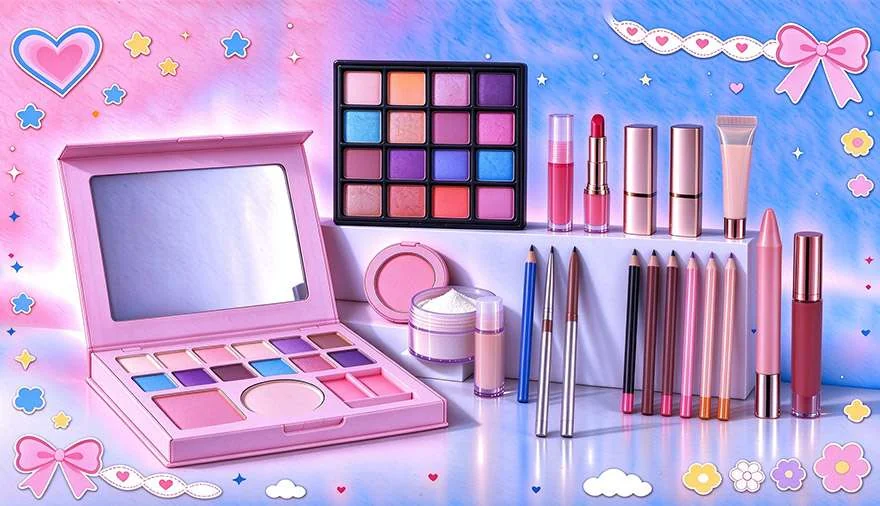
1. Start with certifications, not the price list
Certifications are the fastest way to separate serious factories from trading companies and small workshops. For cosmetics sold in the US and EU, the baseline is:
- ISO 22716 — the international standard for Good Manufacturing Practices (GMP) in cosmetics. Non-negotiable.
- GMPC / GMP — often required alongside ISO 22716 for US market access.
- SEDEX / SMETA — ethical supply-chain audit, increasingly demanded by retailers and licensed programs.
- BSCI — social compliance audit, common for European buyers.
- Disney FAMA / ILS — required if you plan to produce licensed children's cosmetics.
Ask to see the original certificates, check the expiry dates, and confirm the certificate name matches the legal entity on your contract. A factory that hesitates here is a red flag. You can review our own credentials on the B&Z Makeup certifications page.
2. Understand MOQ — and negotiate it honestly
Minimum order quantities vary wildly, and they are not always what they appear. A low headline MOQ often hides per-color or per-SKU minimums that inflate your real order. Ask these questions up front:
- Is the MOQ per product, or per color/SKU?
- Can different shades share one MOQ to let you launch a range?
- What is the MOQ for the packaging versus the formula?
- Do stock formulas have a lower MOQ than custom development?
A genuine factory will give you a clear, written answer. For startups, a manufacturer offering low-MOQ stock formulas lets you test the market before committing to custom tooling.
3. Ask what "custom formulation" really means
"Private label" and "custom formulation" are not the same thing:
- Private label / white label: an existing, proven formula with your branding and packaging. Fast, low risk, low MOQ.
- Custom ODM: a formula developed to your brief — texture, finish, shade, wear time, active ingredients. Slower, higher MOQ, but genuinely differentiated.
If a factory claims to do everything, ask to see their in-house R&D lab, their formula library, and a sample of a previous custom project. Factories with real development capability can show you a formulation dossier, not just a catalog.
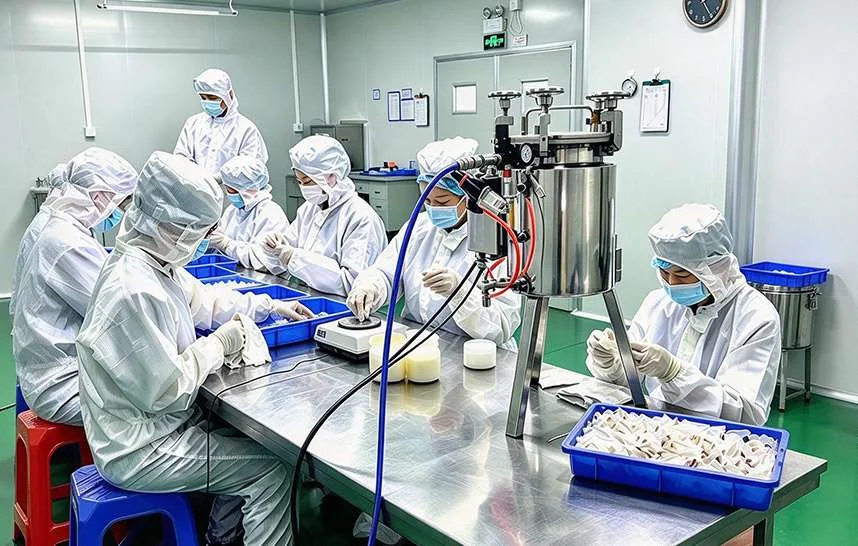
4. Demand a physical sample — and test it like a customer
Never approve a product from a photo. Request samples and put them through real use:
- Wear the lipstick for a full day. Does it feather, dry out, or transfer?
- Check eyeshadow pigmentation and fallout on actual skin.
- Test the foundation across different skin tones and in different lighting.
- Rub, scratch and drop the packaging.
Then ask for a pre-production sample that matches the exact formula and packaging of your final order — not a hand-made mock-up. This is the single best way to avoid "the sample was better than the bulk" disputes.
5. Get the compliance paperwork in writing
Depending on where you sell, you may need an MSDS / SDS for each formula, a COA (Certificate of Analysis) per batch, IFRA compliance for fragrance, FDA MoCRA documentation for the US market, and EU CPNP notification support. A factory experienced in exports prepares these as standard. Confirm who owns the formula documentation and whether you receive it — this matters if you ever need to switch suppliers.
6. Compare lead times — realistically
A trustworthy factory gives you a realistic timeline and tells you what can delay it:
| Stage | Typical timeline |
|---|---|
| Custom formula samples | 7–15 working days |
| Sample confirmation & deposit | Before bulk production starts |
| Bulk production | 25–60 working days after sample confirmation and deposit |
| Shipping | Varies by region |
We accept urgent schedules for time-sensitive projects — but be wary of anyone promising a full custom launch in two weeks. Ask what happens if a shade is rejected, and whether they hold buffer stock.
7. Visit the factory — or have someone you trust do it
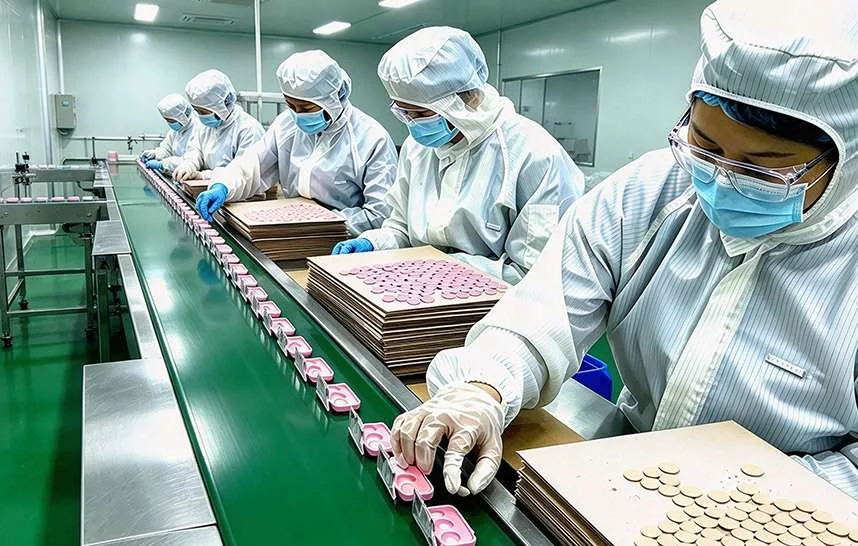
If you cannot travel, request a live video walkthrough of the production line, the lab, the warehouse and the QC station. A real factory is happy to show you. Look for clean, organized production areas; batch records and QC checks in progress; clearly labeled raw materials and finished goods; and staff following hygiene protocols. You can also browse our factory working area and cooperation process.
The buyer's checklist
- Valid, verifiable certifications matching the contract entity
- Clear MOQ structure in writing
- Real in-house R&D and a formula library
- Physical pre-production samples, tested in real conditions
- Complete compliance documentation for your market
- Realistic lead times with contingency plans
- A transparent factory walkthrough
Working with an experienced partner
Choosing a manufacturer is a long-term decision. B&Z Makeup is a 30-year cosmetic OEM/ODM factory in Zhongshan, China, producing private label lip makeup, eye makeup, face makeup, kids cosmetics and makeup sets for brands worldwide — with low MOQ, in-house formulation and full certification.
Request a Formulation Sample & CatalogFrequently Asked Questions
Q: What certifications should a private label makeup manufacturer have?
A: At minimum ISO 22716 (cosmetics GMP). For the US market also expect GMPC and familiarity with FDA MoCRA. SEDEX and BSCI are ethical audits, and Disney FAMA/ILS is required for licensed children's cosmetics.
Q: What is a typical MOQ for private label makeup?
A: It varies. Always ask whether the minimum is per order or per shade, whether it applies to formula or packaging, and whether stock formulas have a lower MOQ. For startups, low-MOQ stock formulas let you test the market first.
Q: What is the difference between private label and custom formulation?
A: Private label uses an existing proven formula with your branding — fast, low risk, low MOQ. Custom ODM develops a formula to your brief — slower, higher MOQ, but genuinely differentiated.
Q: What documents should a cosmetics factory provide with each order?
A: An MSDS/SDS per formula, a COA per batch, IFRA certificates for fragrance where relevant, and support for CPNP (EU) or MoCRA (US) notification.
Q: How long does it take to launch a private label makeup line?
A: Custom formula samples take 7–15 working days. Bulk production takes 25–60 working days after sample confirmation and deposit. We accept urgent schedules for time-sensitive projects.
- Back to B&Z Makeup Homepage
- About B&Z Makeup — 30-year cosmetic OEM factory
- Our core competitive advantages
- More cosmetics OEM FAQs
Contact B&Z Makeup
B&Z Makeup | Zhongshan Bozhen Daily Chemical Co., Ltd.
Email: angus@makeup-oem.com, sales@makeup-oem.com
Website: https://www.makeup-oem.com