How Much Does It Cost to Manufacture Makeup? A 2026 Cost Breakdown
Understand the real cost drivers behind private label makeup — and how to launch without overspending
"How much does it cost to make makeup?" is one of the first questions every founder asks — and the honest answer is: it depends on several controllable choices. Understanding those choices is the difference between a well-planned launch and a budget that spirals. As a 30-year cosmetic OEM factory, here is how we break down cost with our clients.
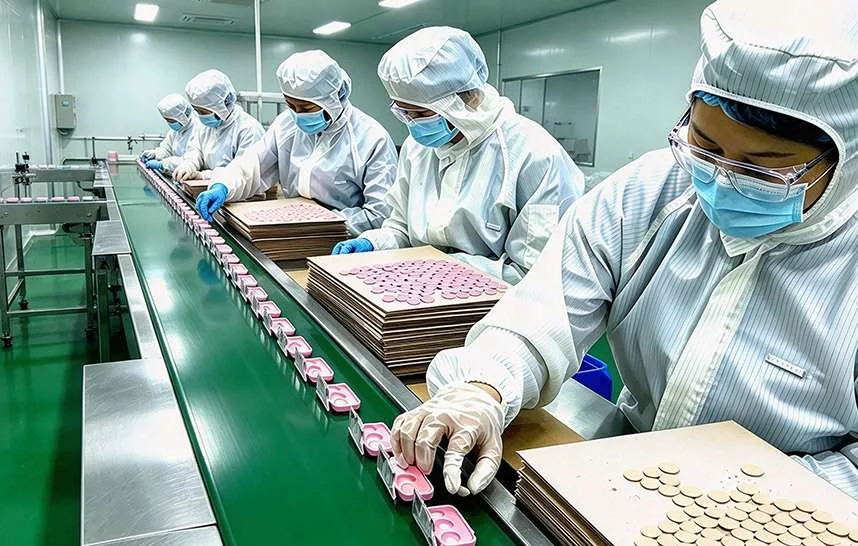
The Main Drivers of Makeup Manufacturing Cost
1. Formula: private label vs. custom
Using an existing, stability-tested formula is the single biggest cost saver for a new brand. Fully custom formulations require R&D, raw material commitments and testing — valuable for differentiation, but expensive and slower. Many brands start with private label and move to custom once volumes justify it.
2. Order quantity (MOQ)
Unit cost falls as volume rises, because setup, labor and material costs are spread across more units. This is why MOQ and unit price are linked — and why starting with realistic quantities matters.
3. Product type and ingredients
A simple lip balm costs less to produce than a multi-pigment eyeshadow palette or a long-wear foundation with specialty actives. Ingredient quality, pigment complexity and performance requirements all move the price.
4. Packaging and decoration
Stock tubes, bottles and compacts are far cheaper than custom-molded components. Printing method also matters: simple labeling is economical, while multi-color printing, hot stamping and custom finishes add cost.
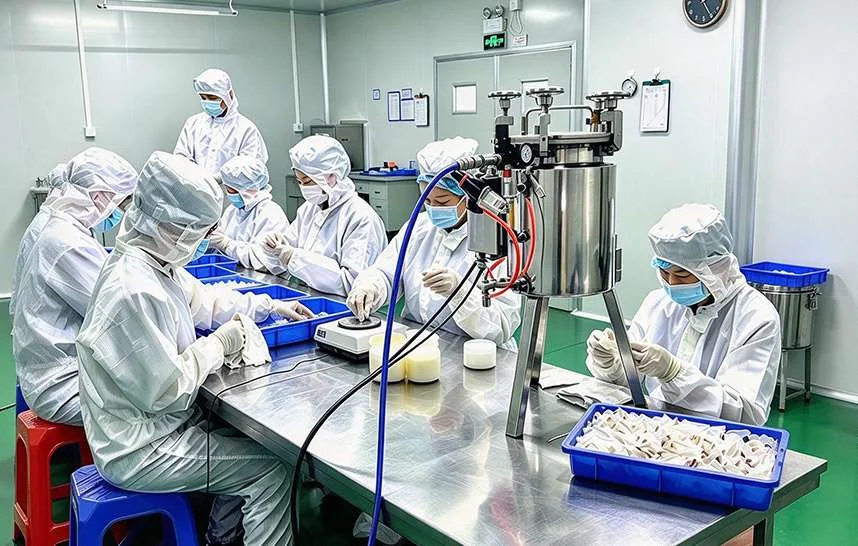
Hidden Costs First-Time Brands Miss
- Custom packaging tooling and molds
- Stability, compatibility and safety testing
- Compliance documentation and market-specific labeling work
- Complex decoration (metallic finishes, embossing, multi-layer printing)
- Extra shade development and sampling rounds
A transparent factory will list these clearly in a detailed quotation. If a price looks suspiciously low, ask exactly what is included — corners get cut somewhere.
How to Control Your Budget
The most cost-effective path for most new brands is a focused launch: one or two hero products built on proven formulas, stock packaging and a small, curated shade range. Our lip, eye and face ranges offer proven bases you can brand and scale. As sales grow, you can reinvest in custom formulas and premium packaging.
Timeline Is Part of Cost
- Custom formula samples: 7–15 working days.
- Bulk production: 25–60 working days after sample confirmation and deposit.
- Urgent schedules can be arranged for time-sensitive projects.
Fast, clear sampling reduces costly delays and rework. Read our guide on how to start a makeup brand for the full launch process.
Get an Itemized Quotation
Tell us your product, target quantity and packaging idea — we will give you a clear, itemized cost breakdown with no surprises.
Request a Detailed QuotationFrequently Asked Questions
Q: How much does it cost to manufacture makeup?
A: It depends on product type, formula customization, MOQ, packaging and testing. Private label with proven formulas and stock packaging is the most affordable route.
Q: What factors affect the unit cost of makeup?
A: Formula and ingredient quality, order quantity, packaging and decoration, shade count, testing and compliance. Higher volumes generally lower unit cost.
Q: Is private label cheaper than custom formulation?
A: Usually yes — private label uses existing stability-tested formulas, avoiding much of the R&D and testing expense.
Q: How can I reduce my launch budget?
A: Launch a focused hero product on a proven formula, use stock packaging, keep the shade range small and scale once sales are proven.
Q: Are there hidden costs in makeup manufacturing?
A: Common ones include custom tooling, extra testing, complex decoration and compliance documentation. Ask for an itemized quotation upfront.
- Back to B&Z Makeup Homepage
- Read: How to Choose a Private Label Makeup Manufacturer
- Read: How to Start a Makeup Brand
- View B&Z Makeup Factory Company Profile
Contact B&Z Makeup OEM Team
B&Z Makeup | Zhongshan Bozhen Daily Chemical Co., Ltd.
Email:
angus@makeup-oem.com ,
sales@makeup-oem.com
Official Website:
https://www.makeup-oem.com